Business Name: BeeHive Homes of Granbury
Address: 1900 Acton Hwy, Granbury, TX 76049
Phone: (817) 221-8990
BeeHive Homes of Granbury
BeeHive Homes of Granbury assisted living facility is the perfect transition from an independent living facility or environment. Our elder care in Granbury, TX is designed to be smaller to create a more intimate atmosphere and to provide a family feel while our residents experience exceptional quality care. BeeHive Homes offers 24-hour caregiver support, private bedrooms and baths, medication monitoring, fantastic home-cooked dietitian-approved meals, housekeeping and laundry services. We also encourage participation in social activities, daily physical and mental exercise opportunities. We invite you to come and visit our assisted living home and feel what truly makes us the next best place to home.
1900 Acton Hwy, Granbury, TX 76049
Business Hours
Monday thru Sunday: 9:00am to 5:00pm
Facebook: https://www.facebook.com/BeeHiveHomesGranbury
YouTube: https://www.youtube.com/@WelcomeHomeBeeHiveHomes
Families usually reach assisted living at a point of stress, not leisure. A parent has actually fallen twice in 3 months. Medications have ended up being confusing or skipped. A spouse with early dementia has begun wandering during the night. Your home that when represented stability now feels dangerous, and adult kids are pulled between work, caregiving, and their own families.
When you begin going to senior care choices, the variety is excessive. Big campuses with theaters and restaurants, little board and care homes tucked into residential neighborhoods, specialized memory care systems, brief stay respite care programs. Sales brochures assure security, dignity, independence. What many households really yearn for is something much easier: a location where their loved one will be known, genuinely supervised, and not lost in a crowd.
Over the past twenty years operating in elderly care, I have actually seen that little assisted living homes often provide that feeling of security and personal connection more regularly than very large neighborhoods. They are not the ideal response for every circumstance, and they bring their own restrictions, yet for many older adults they offer a balance that feels closer to "home" than "facility."
This is an attempt to unpack why.
What "little assisted living" generally means
The label "assisted living" covers a broad spectrum. At one end, there are resort style communities with numerous apartment or condos, numerous dining locations, and a calendar that looks like a cruise ship schedule. At the other, there are six to twelve bed homes on peaceful streets, typically converted single household houses certified to supply senior care.
When I discuss small assisted living homes, I mean those residential scale settings with a minimal variety of residents, generally:
- Licensed for roughly 4 to 16 residents Staffed by a handful of caretakers per shift Located in regular neighborhoods Run by an owner or director who is on site frequently
Terminology differs by state. You will hear "board and care," "RCFE," "residential care home," or "personal care home." Laws vary, but the standard model is similar: assisted living and in some BeeHive Homes of Granbury assisted living cases memory care provided in a home sized environment.
For families used to thinking in terms of "nursing homes," this can feel unknown. Yet for numerous older grownups who do not need complete knowledgeable nursing, these environments fit both their care requirements and their emotional requirements extremely well.
Why smaller typically feels safer
When individuals say a place "feels safe," they are rarely referring just to grab bars and smoke alarm. They are generally describing a mix of visibility, predictability, and human attention. In a small home, numerous practical aspects come together to create that impression.
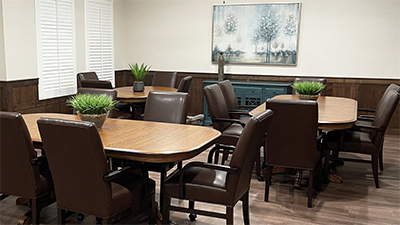
First, the scale itself restricts how much can be missed. In a 10 bed home, a caretaker walking from the kitchen to the living-room passes most bedroom doors. If a resident is attempting to stand from a reclining chair unassisted, somebody is most likely to notice. Casual supervision is constructed into the geography.
Second, personnel know what "normal" appears like for each resident, typically in unexpected detail. When you look after a lots people day after day, you discover who typically eats the entire bowl of oatmeal and who just selects at toast, whose gait is constantly a bit unsteady and who all of a sudden appears slower today. That standard knowledge is important for early detection of problems.
I keep in mind one resident, Mr. K, who resided in a 12 bed home where I spoke with. He was relatively independent, still strolled the backyard path every morning. One day a caretaker pointed out quietly, "He burnt out midway today and muffled the bench. That is not like him." They examined his oxygen saturation, which was lower than usual, and called his medical care workplace. Within 24 hr he was detected with a moderate pneumonia and began on treatment. In a bigger setting, a single shorter walk may not have actually registered the exact same way.
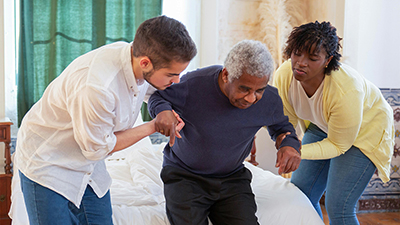
Third, smaller homes tend to have fewer layers between decision makers and daily care. If a caretaker is worried about a new bruise or a modification in hunger, the owner or administrator is typically in the building or a fast telephone call away. There is less administration to push through before acting. Households sense that responsiveness, and it feels safe.
From an environmental viewpoint, smaller homes also generally include:
- Shorter ranges in between rooms Fewer elevators and long corridors Quieter, less chaotic common areas Direct lines of sight in between personnel and residents
That makes a distinction for fall danger, nighttime wandering, and general anxiety. For somebody with movement concerns, the possibility of browsing a long corridor to reach the dining-room two times a day can create fear. Strolling twenty feet to a small dining area feels more manageable, which self-confidence itself minimizes risk.
The psychological side of safety
Physical security is only part of the formula. Psychological security matters simply as much in elderly care, particularly for those with cognitive changes.
In lots of big assisted living neighborhoods, personnel are kind and well trained, but the roster turnover and large variety of citizens make deep familiarity tough. Locals might recognize faces, however not constantly feel known. For someone who has actually currently lost parts of their memory or physical independence, that can seem like being adrift.
In little homes, relationship tends to become the arranging concept. A resident is not "in apartment or condo 310." She is "Mrs. Harris, who likes chamomile tea at 8 pm and wants the paper folded before breakfast." That understanding is not hidden in a care strategy binder. It lives in the daily routines of the staff.
I have actually sat at long table in these homes and seen subtle psychological care in action: a caretaker discovering that Mr. Lopez is looking out the window a bit longer than normal and pulling up a chair to inquire about his preferred fishing spot, another carefully rerouting a confused resident by handing them a basket of napkins to fold during an uneasy spell. These are small minutes, yet for households they answer the most basic fear: "Will somebody notification when my mom is having a hard time, even if she can not request for aid clearly?"
That is particularly important in memory care. Locals with dementia often can not advocate on their own, may misinterpret environments, and can intensify into anxiety or agitation rapidly. A little setting decreases the quantity of sensory input they must process and permits staff to react early to subtle cues.
How care is personalized in smaller sized homes
Personalization is a stylish term, but in elderly care it has a concrete meaning: how specifically does the daily regular fit the person, rather than requiring the person to fit the routine.
Large assisted living and memory care neighborhoods do work hard on this. They develop personalized care plans, ask about biography, and deal differed activities. Yet logistical truths push toward standardization. Meals at set times, group bathing schedules, medication passes done on a stringent route.
In a little home, there is more room to flex the structure to match specific choices. That can appear like:
A resident who always slept in up until 10 am being permitted to keep that habit, instead of being pulled into a 7:30 breakfast. A retired night nurse who stays more comfy staying up later with personnel working quietly in the kitchen nearby. A devout resident having space and privacy set aside for daily prayer at a specific hour, with staff changing shower times around it.
For those with dementia, customization can imply building the day around maintained capabilities instead of losses. I recall a woman who had actually been an instructor for 35 years, now in moderate phase Alzheimer's illness. She was quickly distressed in noisy groups however ended up being calmer when offered jobs that looked like classroom preparation: arranging colored pencils, arranging paper stacks, "reviewing" kids's books. In a small memory care home, staff wove that into her day naturally. In a larger building, where activity calendars were focused on large group occasions, it had been more difficult to sustain that level of tailored engagement.

Assisted living personnel in small homes also tend to understand family dynamics deeply. They know which child is practical and wants difficult information on blood pressure readings, and which daughter calls every night primarily needing reassurance. That comprehending lets them communicate in manner ins which defuse conflict rather than inflame it.
Staffing truths: ratios, connection, and burnout
Families often ask, "What is your personnel to resident ratio?" It is a sensible concern, yet it just informs part of the story.
Small assisted living homes often report ratios that look favorable on paper. For instance, 2 caregivers for 10 citizens throughout the day, and one awake over night, sometimes with a live in team member on the properties. Larger neighborhoods may have more complex staffing structures, with different med techs, caretakers, and nurses turning throughout wings.
The advantage in little homes is less about the raw ratio and more about continuity. The exact same two or three caretakers tend to cover many weekday shifts, another small group covers weekends. Locals and personnel acknowledge each other instantly. Caretakers find out which locals can wait five minutes for a bathroom call and which can not, who is safe to stroll behind unaided and who must be side by side, who will attempt to get up from bed without calling at 3 am if they consumed tea too late.
Continuity also minimizes mistakes. A familiar caregiver is more likely to capture that a medication blister pack looks different this month and concern it. They are most likely to discover weight modifications when assisting a resident gown. In memory care, they quickly see when a brand-new behavior is part of a pattern or an isolated incident.
The obstacle, obviously, is that little homes often run lean. If one caregiver calls out sick at short notice, there is less backup. Owners who run these homes well build pools of on call personnel, action in themselves, and maintain cross training. Households assessing a home ought to not only ask about typical staffing, however also how the home manages gaps, trips, and emergencies.
Burnout is another quiet aspect. In a large building, staff might be stretched thin across many residents, yet the work is somewhat distributed. In a little setting, if care needs increase suddenly for 2 or 3 people at once, the problem can land greatly on a small personnel team. Great operators respond by including additional hours, calling in firm help momentarily, or bringing hospice partners into the discussion. Poor operators merely push personnel harder and hope nobody falls.
When small homes listen to staffing health, the outcome is a level of caregiving stability that residents and households feel instantly. I have actually seen caretakers stay with the same 8 bed home for a decade, shepherding homeowners from their very first day of relocation in through the last days of hospice. That sort of continuity is extremely rare in institutional settings.
Memory care in a little setting: guarantee and limits
Dedicated memory care units inside large neighborhoods can offer safe and secure perimeters, specialized activity programs, and nursing oversight. They are necessary resources for lots of households. Yet they can also feel overstimulating for citizens in mid or later phases of dementia: TVs in typical areas, overhead statements, a consistent parade of staff.
Small memory care homes that take just locals with cognitive impairment technique safety differently. Rather than locking down a large yard, they may fence a workable garden where every corner shows up from the back deck. Rather of a huge group activity space, they depend on the living room, dining table, and backyard as natural event spaces.
The advantages are straightforward. A resident who begins to pace is never far from a familiar caregiver. Sound levels are much easier to manage. Triggers for agitation, like crowded hallways or a lot of unfamiliar faces, are reduced.
However, small memory care homes likewise have tough limits. They rarely have certified nurses on site 24 hours a day. If a resident develops serious behavioral symptoms requiring regular medication modifications, or intricate medical problems like innovative diabetes management, they might be much better served in a bigger community with more powerful clinical infrastructure or in a nursing facility.
Families often feel blindsided when a little home says, "We can no longer safely fulfill your loved one's requirements." From the operator's point of view, this is typically an ethical decision rather than a convenience. A 10 bed home without night nursing can not safely manage a resident who begins to fall multiple times a week regardless of interventions, or who becomes physically aggressive, putting others at risk.
Understanding this from the beginning assists. When you tour, ask straight: "What sort of modifications would make you state that my parent needs a higher level of care?" A transparent answer is a great sign.
Respite care: trying small assisted living on for size
For families who are uncertain whether their loved one will endure a relocation, respite care can offer a low commitment trial. Many little assisted living and memory care homes offer brief stays, typically from one week to a couple of months, where a senior lives in the home temporarily while receiving the same level of support as long term residents.
Respite stays serve several purposes. They give the older grownup a possibility to experience the environment without the pressure of a long-term choice. They offer the household a much needed break from round the clock caregiving. And they let everybody evaluate fit: Is mom more relaxed in this smaller setting, or does she seem tired? Is dad less nervous at night when staff are nearby, or does he bristle at any loss of control?
I dealt with a household taking care of an 84 years of age father with moderate dementia and substantial nighttime roaming. The child was persuaded he would refuse any relocation, yet she was sleeping with one eye open every night, frightened of him leaving the house. They set up a three week respite remain in a six bed memory care home under the pretext of "assisting Dad recuperate after a medical facility visit." To the child's awe, he settled quickly and started signing up with small group songs in the living room each afternoon. By the 2nd week, she told me, "He in fact appears calmer there than in the house." That respite stay eventually became a long-term relocation, however because it began as a momentary measure, everyone felt less caught by the decision.
Respite care is also a chance to check how the home communicates. During the stay, you need to get updates about sleep, appetite, state of mind, and any incidents. Take note not just to what is reported, however to the tone. Are personnel simply recording events, or do they provide thoughtful observations and adjustments?
When a bigger community might be better
Small assisted living homes are not a universal solution. There are clear situations where a larger neighborhood or greater level of care is more appropriate.
Residents with intricate medical requirements that verge on proficient nursing frequently require the on site existence of certified nurses, rehabilitation therapists, and regular doctor oversight. For example, someone with stage IV heart disease on numerous titrated medications, or an insulin dependent diabetic with highly labile blood glucose, may surpass what a small residential home can securely manage.
Some older adults really love more stimulation than a little home can offer. Extroverted homeowners who take pleasure in continuous activity choices, structured classes, and a wide range of peers may discover a small group restricting. I cared for a retired music professor who lasted exactly 3 weeks in a comfortable eight bed home before declaring, rather fairly, that he missed out on the energy of the bigger continuing care community he had previously explored. He relocated to the bigger school, joined three clubs within a month, and was clearly happier.
Couples with mismatched requirements sometimes find better choices in larger settings too. If the better half requires memory care and the other half is still fairly independent, a community with both assisted living and independent living on one school can decrease separation. Some small homes can take the partner with greater needs and permit the much healthier partner to visit daily, yet that plan is not always sustainable.
Cost and area likewise matter. Small homes in certain regions are limited or priced higher than mid market assisted living communities. Families often need to consider distance to their own homes, particularly if they plan to visit numerous times a week.
The secret is to view small homes as one tool in the senior care toolbox, not a universal answer. The right fit depends on care requirements, personality, household involvement, and monetary reality.
What to look for when exploring a small assisted living home
A polished site or kind marketing director can not replacement for what you observe personally. When you tour, your senses are your best guides. One focused checklist can help you organize impressions without minimizing the experience to numbers alone.
Consider paying special attention to these points during your visit:
- Staff presence: Are caregivers noticeable, engaged with locals, and calm, or are they mostly in the workplace or kitchen? Resident mood: Do residents look typically relaxed, groomed, and properly dressed, or do several seem distressed or unattended? Cleanliness and smells: Does the home smell like a resided in house, or are there consistent odors of urine, harsh chemicals, or heavy air freshener covering something else? Communication style: Do personnel address homeowners by name, make eye contact, and discuss what they are doing, or do they talk over homeowners as if they are not present? Flexibility: When you inquire about customized regimens, do you hear particular examples of how they adapt, or just rigid schedules that everybody should follow?
During a great tour, you must feel able to ask direct questions about falls, hospitalizations, and personnel turnover. Transparent homes do not pretend bad things never take place. Instead, they explain what they discovered and how they adjusted.
Also observe how they speak about locals with memory loss. Language matters. Personnel who speak respectfully, prevent labels like "wanderer" or "tough," and focus on staying strengths show a much deeper culture of dignity.
Key questions to ask the administrator or owner
A list of targeted questions can reveal more than an inch thick packet of printed policies. When you consult with the administrator or owner of a small assisted living or memory care home, you may use questions such as:
- "Can you explain a resident whose requirements became too great for you to handle, and how you handled that shift with the family?" "When a caretaker calls out at the last minute, what does your backup strategy actually appear like on a Saturday night?" "How do you coordinate with hospice or home health if my parent eventually requires those services here?" "Tell me about a time something went wrong - a fall, a medication error - and what changed afterward." "If my parent ends up being more confused or upset in the evening, what particular strategies do your personnel usage before turning to medication?"
Notice how they respond. Truthful operators might admit past errors and describe practical enhancements. Prevent places that right away turn to unclear guarantees or become defensive when pressed.
Balancing head and heart in the final choice
Choosing an assisted living, memory care, or respite care setting for somebody you like is among the more emotionally filled decisions most households will ever make. It sits at the crossway of safety, autonomy, finances, and long held family promises.
Small assisted living homes frequently feel more secure and more personal since they compress that choice into a human scale environment. Routines are visible. Personnel are not distant uniforms however people you greet by name. Your mother's favorite chair can fit in the living room. The cook understands which dessert your father should prevent due to the fact that of his blood glucose, and which he will accept alternative fruit for without feeling punished.
Those qualities do not appear by mishap. They grow from thoughtful staffing, attentive management, and an understanding that elderly care is as much relational as it is medical. When succeeded, small homes can supply an environment where older adults, even with substantial requirements, still experience days that make sense, feel seen, and maintain a sense of belonging.
The work for households is to look beyond floor plans and features lists, to test those relational qualities with cautious questions, honest observation, and, when possible, brief respite stays. Numbers such as personnel ratios and month-to-month costs are vital, yet the quieter signs - a hand on a resident's shoulder at the ideal minute, a staff member who remembers your father's war stories from last visit - are often the ones that inform you whether this specific home will truly feel both safer and more personal.
BeeHive Homes of Granbury provides assisted living care
BeeHive Homes of Granbury provides memory care services
BeeHive Homes of Granbury provides respite care services
BeeHive Homes of Granbury supports assistance with bathing and grooming
BeeHive Homes of Granbury offers private bedrooms with private bathrooms
BeeHive Homes of Granbury provides medication monitoring and documentation
BeeHive Homes of Granbury serves dietitian-approved meals
BeeHive Homes of Granbury provides housekeeping services
BeeHive Homes of Granbury provides laundry services
BeeHive Homes of Granbury offers community dining and social engagement activities
BeeHive Homes of Granbury features life enrichment activities
BeeHive Homes of Granbury supports personal care assistance during meals and daily routines
BeeHive Homes of Granbury promotes frequent physical and mental exercise opportunities
BeeHive Homes of Granbury provides a home-like residential environment
BeeHive Homes of Granbury creates customized care plans as residents’ needs change
BeeHive Homes of Granbury assesses individual resident care needs
BeeHive Homes of Granbury accepts private pay and long-term care insurance
BeeHive Homes of Granbury assists qualified veterans with Aid and Attendance benefits
BeeHive Homes of Granbury encourages meaningful resident-to-staff relationships
BeeHive Homes of Granbury delivers compassionate, attentive senior care focused on dignity and comfort
BeeHive Homes of Granbury has a phone number of (817) 221-8990
BeeHive Homes of Granbury has an address of 1900 Acton Hwy, Granbury, TX 76049
BeeHive Homes of Granbury has a website https://beehivehomes.com/locations/granbury/
BeeHive Homes of Granbury has Google Maps listing https://maps.app.goo.gl/xVVgS7RdaV57HSLu9
BeeHive Homes of Granbury has Facebook page https://www.facebook.com/BeeHiveHomesGranbury
BeeHive Homes of Granbury has an YouTube page https://www.youtube.com/@WelcomeHomeBeeHiveHomes
BeeHive Homes of Granbury won Top Assisted Living Homes 2025
BeeHive Homes of Granbury earned Best Customer Service Award 2024
BeeHive Homes of Granbury placed 1st for Senior Living Communities 2025
People Also Ask about BeeHive Homes of Granbury
What is BeeHive Homes of Granbury Living monthly room rate?
The rate depends on the level of care that is needed. We do an initial evaluation for each potential resident to determine the level of care needed. The monthly rate is based on this evaluation. There are no hidden costs or fees
Can residents stay in BeeHive Homes until the end of their life?
Usually yes. There are exceptions, such as when there are safety issues with the resident, or they need 24 hour skilled nursing services
Do we have a nurse on staff?
No, but each BeeHive Home has a consulting Nurse available 24 – 7. if nursing services are needed, a doctor can order home health to come into the home
What are BeeHive Homes’ visiting hours?
Visiting hours are adjusted to accommodate the families and the resident’s needs… just not too early or too late
Do we have couple’s rooms available?
Yes, each home has rooms designed to accommodate couples. Please ask about the availability of these rooms
Where is BeeHive Homes of Granbury located?
BeeHive Homes of Granbury is conveniently located at 1900 Acton Hwy, Granbury, TX 76049. You can easily find directions on Google Maps or call at (817) 221-8990 Monday through Sunday 9:00am to 5:00pm
How can I contact BeeHive Homes of Granbury?
You can contact BeeHive Homes of Granbury by phone at: (817) 221-8990, visit their website at https://beehivehomes.com/locations/granbury/, or connect on social media via Facebook or YouTube
Residents may take a trip to the Hood County Jail Museum . The Hood County Jail Museum offers local history exhibits that create an engaging yet manageable outing for assisted living, memory care, senior care, elderly care, and respite care residents.